logo
  • High-end Spinning

  • Shuttleless Looms

  • Industrial Sewing

  • Computerized Knitting

  • Shoe-making Lines

  • Intelligence Dimension

  • Search News

    Global Advanced Textile & Apparel Systems (ATAS)
    

    Industry Portal

    Global Advanced Textile & Apparel Systems (ATAS)
    • High-end Spinning

    • Shuttleless Looms

    • Industrial Sewing

    • Computerized Knitting

    • Shoe-making Lines

    • Intelligence Dimension

    Hot Articles

    Global Advanced Textile & Apparel Systems (ATAS)
    • Flexible Garment Manufacturing Automation: Where It Cuts Changeover Time and Rework
      Flexible garment manufacturing automation helps apparel lines cut changeover time, reduce rework, and stabilize quality. See where it delivers the fastest ROI.
    • Flexible Shoe Manufacturing Solutions vs Fixed Lines: Which Fits Small-Batch Orders?
      Flexible shoe manufacturing solutions vs fixed lines: discover which setup cuts changeovers, protects margins, and helps small-batch footwear orders ship faster with less waste.
    • Footwear Machinery for Slipper Production: Machine Types and Line Setup Basics
      Footwear machinery for slipper production explained: compare machine types, match equipment to slipper styles, and learn basic line setup tips to improve output, quality, and flexibility.

    Popular Tags

    Global Advanced Textile & Apparel Systems (ATAS)
    • High-end Spinning

    • Shuttleless Looms

    • Industrial Sewing

    • Computerized Knitting

    • Shoe-making Lines

    • Intelligence Dimension

    Industry News

    Shuttleless Looms

    Home - Shuttleless Looms
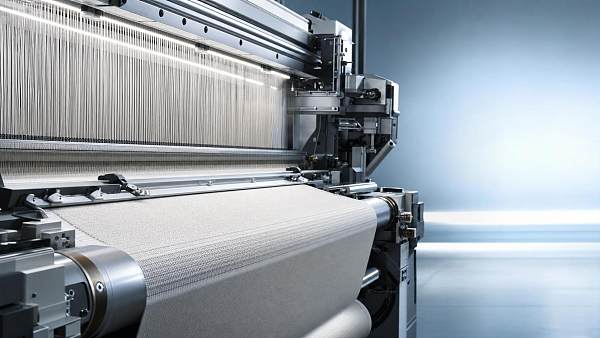
    • Textile Manufacturing Equipment With Tension Control: Which Parameters Affect Fabric Stability?

      TIME

      Jun 29, 2026
      Textile Manufacturing Equipment With Tension Control: Which Parameters Affect Fabric Stability?
      Textile manufacturing equipment with tension control: discover which parameters most affect fabric stability, reduce defects, improve consistency, and support smarter production decisions.
      auth.
      Weaving Dynamics Fellow
      Read More
      CONTACT US
    • How to Compare an Air-Jet Looms Manufacturer by Speed Stability, Support, and Total Cost

      TIME

      Jun 25, 2026
      How to Compare an Air-Jet Looms Manufacturer by Speed Stability, Support, and Total Cost
      Air-jet looms manufacturer selection starts with speed stability, service depth, and total cost. Learn how to compare suppliers for reliable output and stronger ROI.
      auth.
      Weaving Dynamics Fellow
      Read More
      CONTACT US
    • How Flexible Manufacturing Systems for Textiles Reduce Changeover Time in Multi-SKU Production

      TIME

      Jun 25, 2026
      How Flexible Manufacturing Systems for Textiles Reduce Changeover Time in Multi-SKU Production
      Flexible manufacturing systems for textiles cut changeover time in multi-SKU production through recipe control, automation, and real-time feedback. See how they boost uptime, quality, and fast-response output.
      auth.
      Weaving Dynamics Fellow
      Read More
      CONTACT US
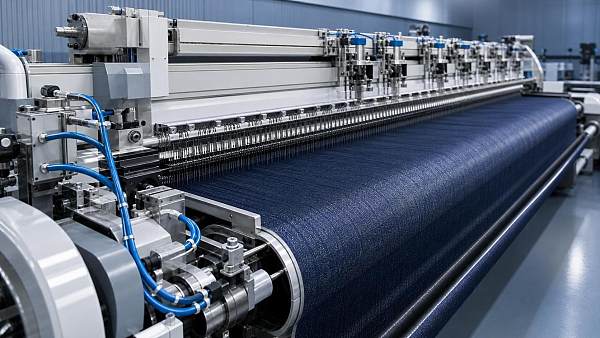
    • Air-Jet Looms for Denim: What Fabric Width, Speed, and Air Consumption Matter Most?

      TIME

      Jun 22, 2026
      Air-Jet Looms for Denim: What Fabric Width, Speed, and Air Consumption Matter Most?
      Air-jet looms for denim: compare fabric width, stable speed, and air consumption to cut cost per meter, improve output, and choose the right loom for denim production.
      auth.
      Weaving Dynamics Fellow
      Read More
      CONTACT US
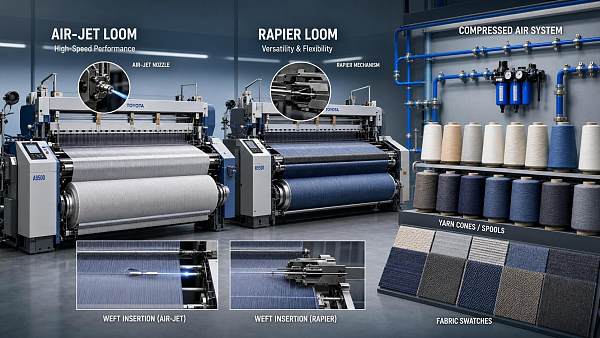
    • Air-Jet Looms vs Rapier Looms: Fabric Types, Speed, Energy Use, and Maintenance Compared

      TIME

      Jun 21, 2026
      Air-Jet Looms vs Rapier Looms: Fabric Types, Speed, Energy Use, and Maintenance Compared
      Air-jet looms vs rapier looms: compare fabric compatibility, speed, energy use, and maintenance to choose the right weaving solution for higher efficiency and smarter textile investment.
      auth.
      Weaving Dynamics Fellow
      Read More
      CONTACT US
    • High-Efficiency Weaving: Which Loom Parameters Improve Speed Without More Defects?

      TIME

      Jun 20, 2026
      High-Efficiency Weaving: Which Loom Parameters Improve Speed Without More Defects?
      High-efficiency weaving starts with the right loom parameters. Learn how tension, timing, air pressure, and take-up can boost speed while reducing defects and waste.
      auth.
      Weaving Dynamics Fellow
      Read More
      CONTACT US
    • What Are Automated Weaving Systems and Which Fabric Mills Benefit Most?

      TIME

      Jun 20, 2026
      What Are Automated Weaving Systems and Which Fabric Mills Benefit Most?
      Automated weaving systems help fabric mills boost speed, quality, and flexibility. Discover which mills benefit most and how automation improves uptime, control, and profits.
      auth.
      Weaving Dynamics Fellow
      Read More
      CONTACT US
    • Automated Weaving Systems Selection Guide: Speed, Fabric Range, and Maintenance Factors

      TIME

      Jun 19, 2026
      Automated Weaving Systems Selection Guide: Speed, Fabric Range, and Maintenance Factors
      Automated weaving systems selection guide covering speed, fabric range, and maintenance factors to help mills improve uptime, flexibility, and long-term production value.
      auth.
      Weaving Dynamics Fellow
      Read More
      CONTACT US
    • High-Efficiency Weaving vs Conventional Loom Setups: Which Delivers Better Output?

      TIME

      Jun 19, 2026
      High-Efficiency Weaving vs Conventional Loom Setups: Which Delivers Better Output?
      High-efficiency weaving vs conventional looms: discover which setup delivers higher output, better quality, lower labor cost, and faster ROI for modern textile production.
      auth.
      Weaving Dynamics Fellow
      Read More
      CONTACT US
    • <Previous
    • 1
    • 2
    • 3
    • Next>

    Quarterly Executive Summaries Delivered Directly.

    Join 50,000+ industry leaders who receive our proprietary market analysis and policy outlooks before they hit the public library.

    Dispatch Transmission
Submit

ATAS

The Global Advanced Textile & Apparel Systems (ATAS) is a premier intelligence portal dedicated to high-end spinning, ultra-speed weaving, automated sewing, and smart shoe-making assembly lines. As a deep observer of the transition of global light manufacturing from "labor-intensive" to "technology & capital-intensive," ATAS aims to perfectly link extreme mechanical piercing speeds, micro-tension control of flexible materials, and the ultra-fast supply chain needs of the global Fast Fashion industry through rigorous intelligence "stitching."

In the current global apparel and footwear manufacturing landscape, ATAS focuses on the five pillars reshaping the fundamental logic of the industry:

High-end Spinning Machines: The "Magicians of Fiber." Through fully automated rotor spinning and compact spinning technologies, they twist cotton and synthetic fibers into high-strength yarns at extremely high speeds, bidding farewell to traditional labor-heavy mills.

Shuttleless Looms: The "Super Printers" of fabrics. Ultra-high-speed air-jet looms utilize high-pressure airflow to achieve thousands of weft insertions per minute, defining the ultimate production capacity of the modern textile industry.

Industrial Sewing Machines: The core heart of garment processing, transitioning from standalone manual operations to digitalized fleet management models equipped with IoT monitoring, automatic thread-breakage recognition, and template sewing.

Computerized Flat Knitting Machines: The sharp tools reshaping knitwear. Utilizing "3D Seamless Knitting" and "Flying-knit Upper" technologies, they achieve "what you see is what you get" outputs directly from a single yarn, completely eliminating waste caused by cutting and seaming.

Smart Shoe-making Lines: Breaking the bottleneck of heavy reliance on manual labor in footwear. Integrating 3D vision scanning, robotic precision spraying, and auto sole attaching, they make personalized customization and mass production possible on the same assembly line.

Strategic Intelligence Center: The Brain of Flexible Manufacturing.
At the heart of ATAS, the "Strategic Intelligence Center" is driven by Textile Process Scientists, Apparel Automation Experts, and Footwear Manufacturing Strategists. We do more than distribute Latest Sector News—capturing the pulse of global cotton trade dynamics and the shift of multinational apparel manufacturing capacity (to Southeast Asia, Latin America, Africa). We also provide in-depth Evolutionary Trends reports, analyzing the CFD simulation of air-jet loom flow fields, the microelectronic drive response of knitting needle selectors, and the deep learning algorithms of robotic vision in handling irregular shoe upper wrinkles. Our Commercial Insights module reveals the explosive demand for flexible manufacturing equipment driven by the "small-batch, quick-response" model, assisting global textile equipment suppliers in winning high-premium orders through absolute technical prestige.

Vision & Mission: Weaving Efficiency, Sewing the Future.
The mission of ATAS is to ensure that every spindle, every loom, and every shoe-making line maximizes its asset utilization and flexible response throughout its lifecycle. We are committed to promoting full automation, IoT integration, and zero-waste capabilities of light industry equipment, helping machinery enterprises achieve outstanding international voice in the tracks of "Dark Factories" and the "Fast Fashion Revolution."

Our Slogan: Visioning Flexible Limits, Intelligence Weaving the Future.

Links

  • About Us

  • Contact Us

  • Resources

Mechanical

  • High-end Spinning

  • Shuttleless Looms

  • Industrial Sewing

  • Computerized Knitting

  • Shoe-making Lines

  • Intelligence Dimension

Copyright © Global Advanced Textile & Apparel Systems (ATAS)

Site Index

