Search News
Global Advanced Textile & Apparel Systems (ATAS)Industry Portal
Global Advanced Textile & Apparel Systems (ATAS)Hot Articles
Global Advanced Textile & Apparel Systems (ATAS)- Flexible Garment Manufacturing Automation: Where It Cuts Changeover Time and ReworkFlexible garment manufacturing automation helps apparel lines cut changeover time, reduce rework, and stabilize quality. See where it delivers the fastest ROI.
- Flexible Shoe Manufacturing Solutions vs Fixed Lines: Which Fits Small-Batch Orders?Flexible shoe manufacturing solutions vs fixed lines: discover which setup cuts changeovers, protects margins, and helps small-batch footwear orders ship faster with less waste.
- Footwear Machinery for Slipper Production: Machine Types and Line Setup BasicsFootwear machinery for slipper production explained: compare machine types, match equipment to slipper styles, and learn basic line setup tips to improve output, quality, and flexibility.
Textile machinery upgrades that reduce downtime first
When every minute of stoppage cuts output and raises repair pressure, smart textile machinery upgrades become a practical path to lower downtime first. For after-sales maintenance teams, the real value lies in faster fault detection, more stable performance, and easier lifecycle support. This article explores how targeted upgrades can improve equipment reliability while helping factories respond faster to modern production demands.
What does “downtime-first” mean in textile machinery upgrades?

A downtime-first strategy means selecting textile machinery improvements based on their ability to reduce unplanned stops before chasing maximum speed or headline automation. In spinning, weaving, sewing, knitting, and shoe-making lines, even a high-output machine loses value if frequent failures interrupt production, create quality drift, or force long troubleshooting cycles.
This approach is especially relevant in modern light manufacturing, where short lead times, smaller batch sizes, and faster style changeovers increase operational pressure. A loom that runs slightly slower but holds stable tension, detects nozzle issues early, and supports quick maintenance can outperform a faster but unstable system over a full shift.
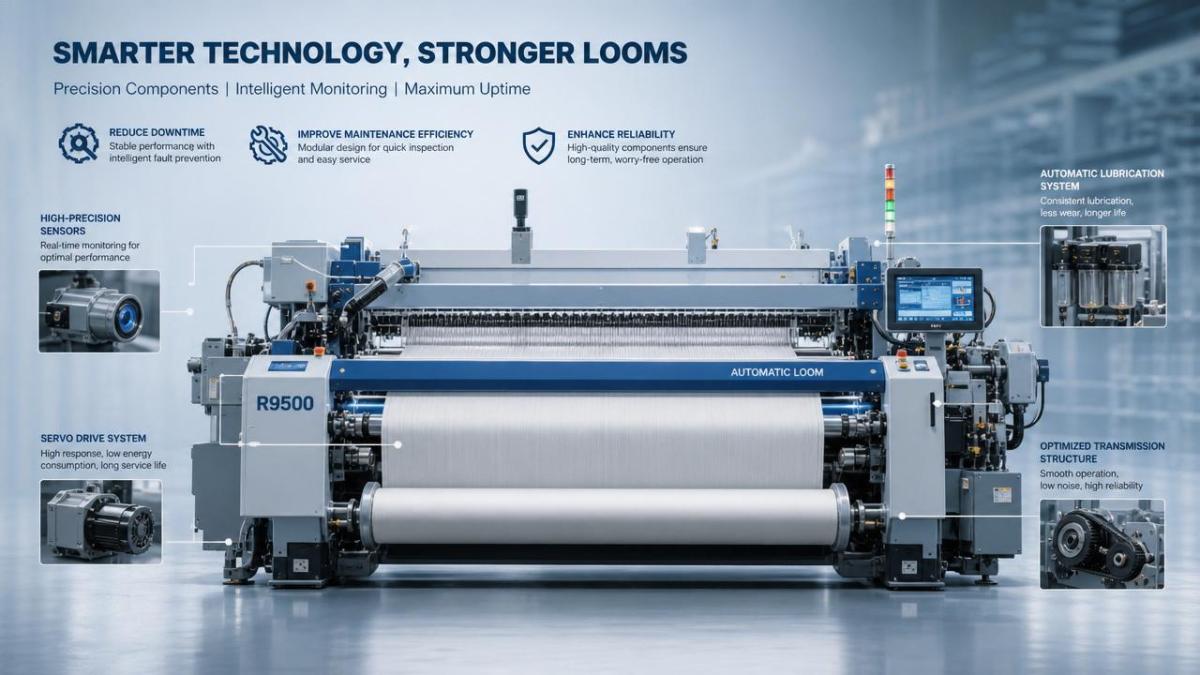
For ATAS-focused sectors, downtime-first thinking usually targets three priorities: preventing repeat faults, shortening repair time, and improving visibility across the equipment lifecycle. Typical upgrades include sensor kits, predictive maintenance modules, servo drive improvements, lubrication control, digital thread-break monitoring, and centralized fleet dashboards. The goal is not to rebuild every machine at once, but to remove the most expensive causes of interruption first.
Which textile machinery upgrades usually reduce downtime the fastest?
The fastest gains often come from upgrades that improve detection, consistency, and maintenance access rather than from complete line replacement. In many textile machinery environments, the first layer of value comes from making invisible failures visible. Once teams can see abnormal vibration, air pressure fluctuation, motor overheating, thread tension instability, or feeder inconsistency in real time, response becomes faster and less disruptive.
High-impact upgrade areas
- Condition monitoring sensors: Useful for bearings, motors, compressors, and drive assemblies. They help identify wear before a sudden stop occurs.
- Servo and inverter modernization: Older control systems often create unstable starts, inconsistent motion, and difficult spare-part sourcing.
- Automatic lubrication systems: These reduce failures linked to poor maintenance intervals and manual inconsistencies.
- Thread-break and tension control modules: Essential in sewing, weaving, and knitting applications where material behavior changes rapidly.
- IoT maintenance dashboards: They connect machine alarms, service logs, and parts history into one usable maintenance view.
- Air system optimization for shuttleless looms: Air leaks, unstable pressure, and nozzle contamination are common downtime drivers in air-jet weaving.
In spinning frames, compact spinning retrofits and automated cleaning systems often improve both yarn quality stability and machine availability. In shuttleless looms, nozzle health monitoring and pneumatic optimization can sharply reduce stops caused by poor weft insertion. In industrial sewing lines, digitalized machine networking helps isolate recurring issues by operator station, style, and material type. In computerized flat knitting, selector response diagnostics and yarn feeding consistency are often stronger investments than cosmetic interface changes.
How can maintenance teams decide which textile machinery should be upgraded first?
The best starting point is not the newest machine or the oldest one. It is the equipment that creates the highest combined loss through stoppage frequency, repair complexity, spare-part difficulty, and downstream disruption. A practical ranking method is to review six to twelve months of maintenance records and score each textile machinery asset against clear downtime indicators.
This framework works across integrated operations. For example, a weaving machine with moderate repair cost but severe impact on fabric delivery may deserve higher priority than a less connected unit with similar fault rates. The same logic applies to smart shoe-making lines, where a vision-guided spraying cell may be critical because upstream and downstream stations depend on its cycle stability.
A useful rule is to upgrade systems that create repeatable stoppage patterns first. Random failures are harder to solve immediately, but repeated alarms usually point to fixable weaknesses in sensing, calibration, airflow, drive performance, software logic, or maintenance routines.
What are the most common mistakes when upgrading textile machinery for reliability?
One common mistake is focusing only on machine speed. Higher speed without better control can amplify vibration, yarn stress, needle wear, heat, and air instability. In that case, the upgraded textile machinery may produce more alarms instead of more sellable output.
Another mistake is installing digital monitoring without creating a response workflow. Sensors alone do not reduce downtime. Teams need alarm thresholds, escalation rules, service documentation, and clear ownership. If a dashboard reports bearing temperature drift but nobody reviews the trend or acts before failure, the upgrade becomes a display tool rather than a reliability tool.
Compatibility errors also create hidden costs. Legacy looms, sewing heads, knitting systems, or automated assembly cells may require careful interface checks before new drives, PLC modules, or IoT gateways are added. Poor integration can introduce communication faults, unstable timing, or support problems across different vendors.
Risk reminders before retrofit work
- Do not skip baseline data collection before upgrading.
- Avoid replacing hardware when the root cause is maintenance practice or process setup.
- Check software support life and spare-part roadmap, not only purchase price.
- Test upgrades on one critical machine or module before scaling line-wide.
- Include operator and technician training in the implementation plan.
ATAS-driven industry intelligence shows that the most successful reliability projects connect process science with service practicality. For example, air-jet loom upgrades should account for airflow behavior and nozzle contamination patterns, while knitting machine retrofits should consider selector response, yarn path stability, and digital pattern accuracy together.
How do cost, implementation time, and ROI compare across upgrade options?
Not every textile machinery upgrade requires a large capital budget or full production shutdown. In fact, many downtime-reduction improvements sit in the middle ground between routine maintenance and total replacement. The strongest ROI often comes from modular upgrades that shorten stoppages quickly while extending asset life.
A realistic ROI review should include direct and indirect effects: lower unplanned stoppage, fewer emergency parts orders, less overtime repair work, reduced defect rates, and better schedule reliability. In fast fashion supply environments, schedule reliability alone can justify selected upgrades because delayed output affects more than one order cycle.
Implementation timing also matters. Planned shutdown windows, off-season capacity, and staged commissioning reduce risk. For mixed fleets, it is often smarter to standardize controls or monitoring across machine families in phases instead of attempting a one-time digital overhaul.
How can a factory build a practical upgrade roadmap for textile machinery?
A workable roadmap starts with visibility, not assumptions. Begin by identifying the top sources of downtime across spinning, weaving, sewing, knitting, or shoe assembly assets. Then separate them into mechanical wear, control instability, material handling sensitivity, air or fluid problems, and human-interface issues. This creates a clearer map for selecting the right textile machinery upgrades.
Next, define a phased plan. Phase one should target fast-payback actions such as condition monitoring, lubrication consistency, calibration routines, and digital alarm history. Phase two can address motion control modernization, networked diagnostics, or bottleneck workstations. Phase three should consider deeper retrofit or replacement decisions based on validated field data, not guesswork.
Support strategy is just as important as hardware choice. The long-term value of advanced textile machinery depends on documentation, spare-part planning, remote diagnostics, and cross-functional understanding between process and service teams. ATAS highlights this lifecycle view because smart manufacturing performance is built not only by machine capability, but by how quickly knowledge moves from fault event to corrective action.
In summary, the best upgrades are not always the largest ones. The strongest downtime-first results usually come from targeted improvements that stabilize critical functions, simplify maintenance, and make failure patterns easier to detect early. Start with the machines that stop most often, take longest to repair, or disrupt the widest part of the process. Then use measured results to expand the roadmap with confidence. For organizations tracking the future of textile machinery, this disciplined path creates a stronger foundation for automation, flexible manufacturing, and higher asset utilization over time.
Recommended News